
Most people know that stress is tiring, but what is less well understood is why prolonged stress can leave you feeling depleted for days or weeks after the stressful period has passed. The answer is not simply psychological. It is biological, and it starts with NAD+, the molecule central to how every cell produces energy.
Nuchido TIME+ is a clinically studied NAD+ supplement formulated to support the cellular energy systems that chronic stress places under pressure.

How Chronic Stress Increases NAD+ Demand
When the body perceives stress, it triggers a cascade of protective responses. Cortisol is released, inflammation increases, and DNA repair mechanisms are activated. All of these are energy-intensive processes that draw heavily on NAD+ to function.
Under short-term stress, this is manageable. The problem arises with chronic stress, where demand remains elevated over weeks or months. Chronic inflammation activates enzymes called PARPs, which consume NAD+ rapidly as part of the DNA damage response. At the same time, CD38, another NAD+-consuming enzyme, increases its activity under inflammatory conditions. They create a level of NAD+ consumption that the body's production capacity struggles to match.

The NAMPT and Salvage Pathway Connection
The body replenishes NAD+ primarily through the salvage pathway, in which the enzyme NAMPT (nicotinamide phosphoribosyltransferase) recycles NAM, a byproduct of NAD+ consumption, back into fresh NAD+. This recycling loop is the main source of NAD+ in your cells.
Chronic stress disrupts this in two ways. First, elevated consumption from PARP and CD38 activity generates more NAM than the salvage pathway can efficiently process. Second, NAMPT activity itself declines under conditions of sustained inflammation and oxidative stress, reducing the cell's capacity to recycle NAD+ at the very moment demand is highest. NAD+ levels fall, and with them, the cellular energy available to every tissue in the body.
Why Post-Stress Energy Crashes Are Not Just Mental
- The exhaustion that follows prolonged stress is often described as burnout. The emotional component is real, but so is the physical one. When NAD+ levels fall, mitochondria operate less efficiently, producing less ATP, the form of energy cells actually run on. Less ATP means less available energy for every process in the body, from physical movement to cognitive function.
- This is why post-stress fatigue often feels different from ordinary tiredness. It does not resolve fully with sleep or a restful weekend. The cellular energy deficit persists until NAD+ levels are restored and the salvage pathway is functioning effectively again.
How Restoring NAD+ Supports Cellular Resilience
Supporting NAD+ levels during and after periods of stress gives the body's cellular systems the resources they need to maintain and recover normal function. Healthy NAD+ levels support several processes directly relevant to stress recovery:
ATP production
NAD+ is a critical for mitochondrial energy production, helping cells sustain output even under increased demand.
DNA repair
Stress-induced DNA damage is repaired by PARP enzymes that depend on NAD+. Adequate supply supports this repair without depleting energy available for other functions.
Sirtuin activity
Sirtuins are NAD+ dependent proteins that regulate the cellular stress response, inflammation, and mitochondrial health. Their activity depends directly on NAD+ availability.
Inflammatory resolution
Once a stressor has passed, NAD+ supports the pathways that help bring inflammation back down, enabling recovery rather than prolonging immune activation.
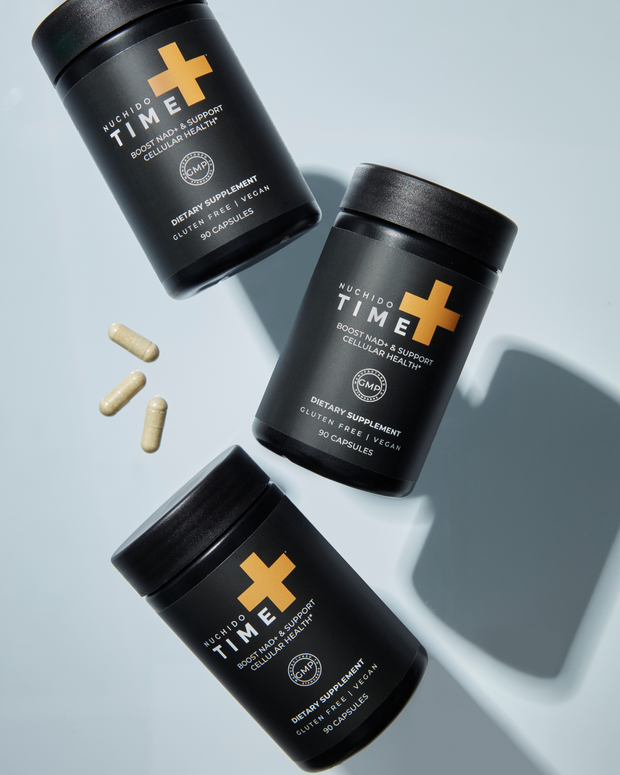
SUPPORT YOUR CELLULAR ENERGY WITH NUCHIDO TIME+
0
days
0
hours
0
mins
0
secs
What Helps Support Energy During and After Stress
Managing the Stress Load
Sustained sleep, regular movement, and genuine rest all reduce the inflammatory signalling that drives PARP and CD38 activity. These are not incidental lifestyle factors; they directly affect the rate at which NAD+ is consumed. See also how NAD+ connects to stress and energy in young professionals.
Nutritional Support
B vitamins, zinc, and polyphenol-rich foods including green tea, parsley, and citrus support the cofactors involved in NAD+ production and can help to lower inflammation. During periods of elevated stress, dietary quality often declines at precisely the moment the body needs these nutrients most.
NAD+ Supplementation
Where lifestyle support is not enough, targeted NAD+ supplementation may help restore cellular energy systems more directly. Nuchido TIME+ activates NAMPT to support the salvage pathway, contains ingredients that help reduce the inflammatory NAD+ consumption driven by CD38 and PARP activity, and supplies nicotinamide as a direct precursor. It is the only NAD+ supplement clinically proven in a human trial to restore the body's natural NAD+ production pathway. View our clinical evidence.
Testimonials
THE TIMES+
Read our blogs to understand how aging affects cellular energy, muscle fatigue and repair.

The Role of NAD+ in Feeling Energized, Healthy and Balanced
Learn why NAD+ is so important for keeping the body healthy, balanced and energized.

New Year, New Me: 7 Wellness Hacks You Need to Try
Discover seven affordable, science-backed wellness habits that support cellular health, boost energy and promote longevity.
NAD+: Performance at the cellular level
Discover how NAD+ can support your training goals by boosting energy, powering muscle repair, and regulating inflammation.
How Long Should Muscle Strain or Tear Recovery Take Based on My Age?
Learn how muscle recovery time changes with age and discover how maintaining NAD+ levels can help faster healing after a pulled or torn hamstring.