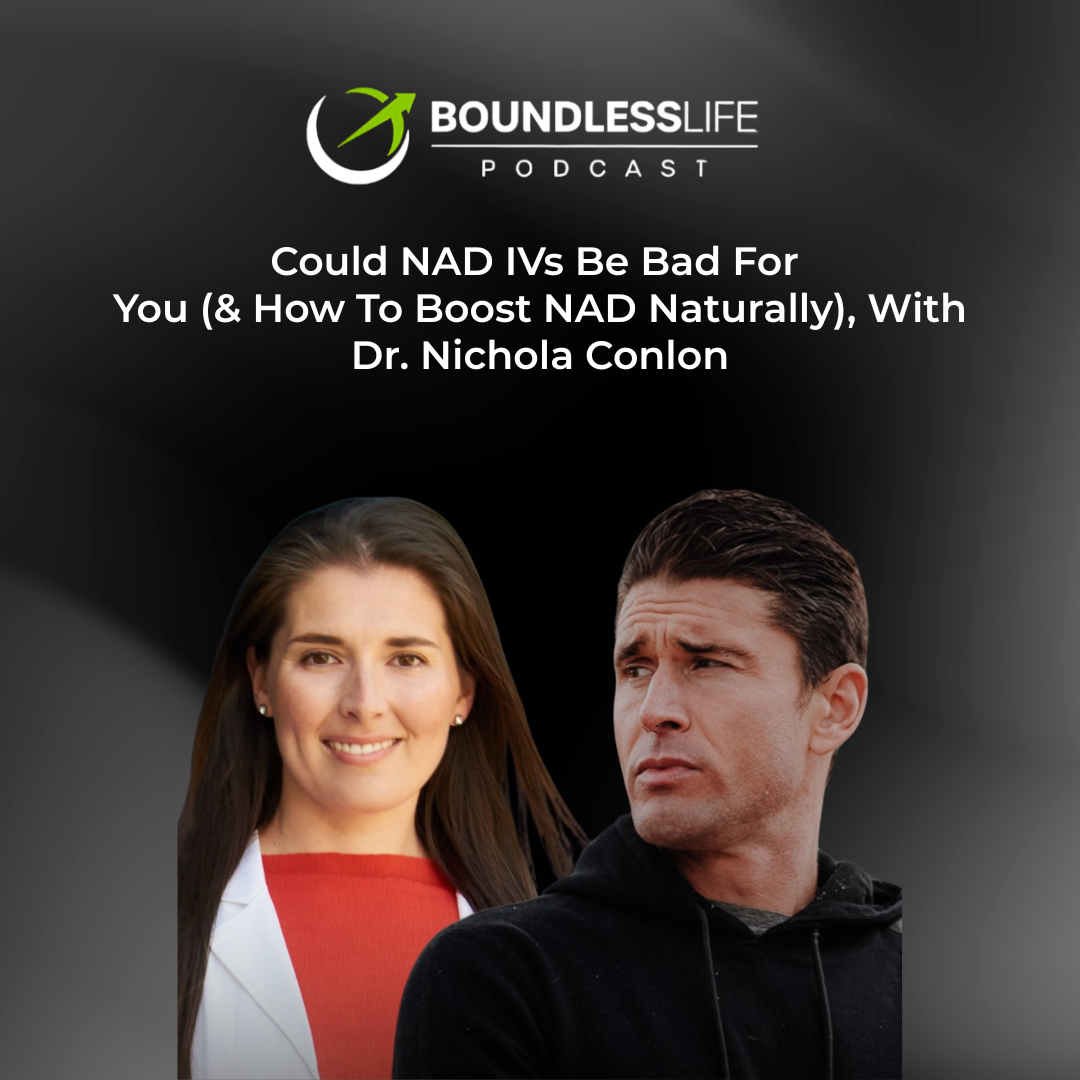
Ben Greenfield Talks NAD+ With Dr Nichola Conlon: Supplements, IVs & Longevity
In a recent episode of The Boundless Life Podcast, hosted by Ben Greenfield, longevity expert and Nuchido founder Dr Nichola Conlon joined the conversation to unpack one of the most talked about topics in longevity science: NAD+.
Together Ben and Nichola discuss how NAD+ works, why it declines with age, and whether current supplementation strategies are truly effective.
What NAD+ actually does in the body
Dr Conlon began by grounding the conversation in biology. NAD+ is not a foreign compound, it is something every single cell already contains and depends on for survival.
As she explained, “High NAD means lots of energy, lots of repair. Low NAD means less energy, less repair.” At its core, NAD+ supports two fundamental processes: energy production within the mitochondria and cellular repair systems. Without it, cells lose both energy and resilience.
Why NAD+ declines with age
A central focus of the podcast was the consistent decline of NAD+ as we get older, estimated to fall by around 50% every two decades. However, Dr Conlon emphasised that the real story is not just the decline itself, but the breakdown in the systems that maintain it.
Much of this comes down to a pathway known as the NAD salvage system, which is responsible for recycling NAD+ after it is used.
As she explained, when this system becomes less efficient with age, the body struggles to keep up with demand. At the same time, inflammation increases NAD+ consumption, placing even greater pressure on already limited supplies.
This combination of reduced recycling and increased usage, creates a metabolic imbalance that contributes to aging at a cellular level.
The problem with NMN & NR
One of the most important parts of the discussion challenged the assumption that simply taking more NAD+ or its precursors is enough to restore levels.
Dr Conlon highlighted “Supplements like NMN and NR are designed to provide raw building blocks, they still depend on the body’s ability to convert and recycle them effectively.”
She described a key limitation in the system: when the salvage pathway becomes less active with age, adding more precursors does not necessarily translate into higher NAD+ levels.
Instead, unused precursors can accumulate and be diverted into other pathways, increasing methylation demand in the body. This led to a broader reframing of NAD+ boosting supplements, from “adding more” to “fixing the system.”
Does NAD IV therapy actually work?
The conversation also explored the growing popularity of NAD+ IV drips. While widely used in wellness and longevity clinics, Dr Conlon urged caution when looking at the underlying science.
She noted that “NAD+ is a large and unstable molecule that does not easily enter cells, which is where it actually needs to function.” More importantly, she highlighted emerging research suggesting that introducing high concentrations of NAD+ into the bloodstream may trigger an inflammatory response.
As she explained, “when molecules normally found inside cells appear in large amounts outside them, the body can interpret this as a stress signal.”
A systems-based approach to NAD+ support
Dr Conlon outlined a different approach to boosting NAD+, one that targets the underlying biology of NAD+ decline. This includes supporting the body’s natural recycling system, reducing unnecessary NAD+ consumption, and ensuring that the pathways responsible for production remain active.
The goal, she explained, is not simply to “top up” NAD+, but to restore the body’s ability to regulate it properly. This systems-level thinking is at the heart of Nuchido’s approach to cellular health.
Unlike single-precursor strategies such as NMN or NR, Nuchido is designed to act across multiple points in the NAD+ system at once, rather than simply providing additional raw material. In the podcast, Dr Conlon also detailed the key ingredients in the Nuchido TIME+ formula and shared results from human clinical trials demonstrating improvements in NAD+ levels, markers of cellular health and reversal of biological age.
Lifestyle is critical for longevity
While much of the conversation focused on biochemistry, both Ben and Dr Conlon returned repeatedly to the importance of lifestyle.
Exercise, fasting, and metabolic stressors such as sauna and cold exposure were all discussed as natural ways to activate NAD+-producing pathways. Sleep and inflammation control were also highlighted as key regulators of cellular energy balance.
These inputs, Dr Conlon explained, help the body maintain NAD+ homeostasis by naturally stimulating the same pathways that decline with age.
For listeners, the episode offers a deeper look into the science behind one of the most talked-about molecules in longevity and raises important questions about how we approach cellular aging more broadly.
Click here to listen to the full conversation between Dr Nichola Conlon and Ben Greenfield.
The podcast is also available on Spotify, YouTube and Apple podcasts.