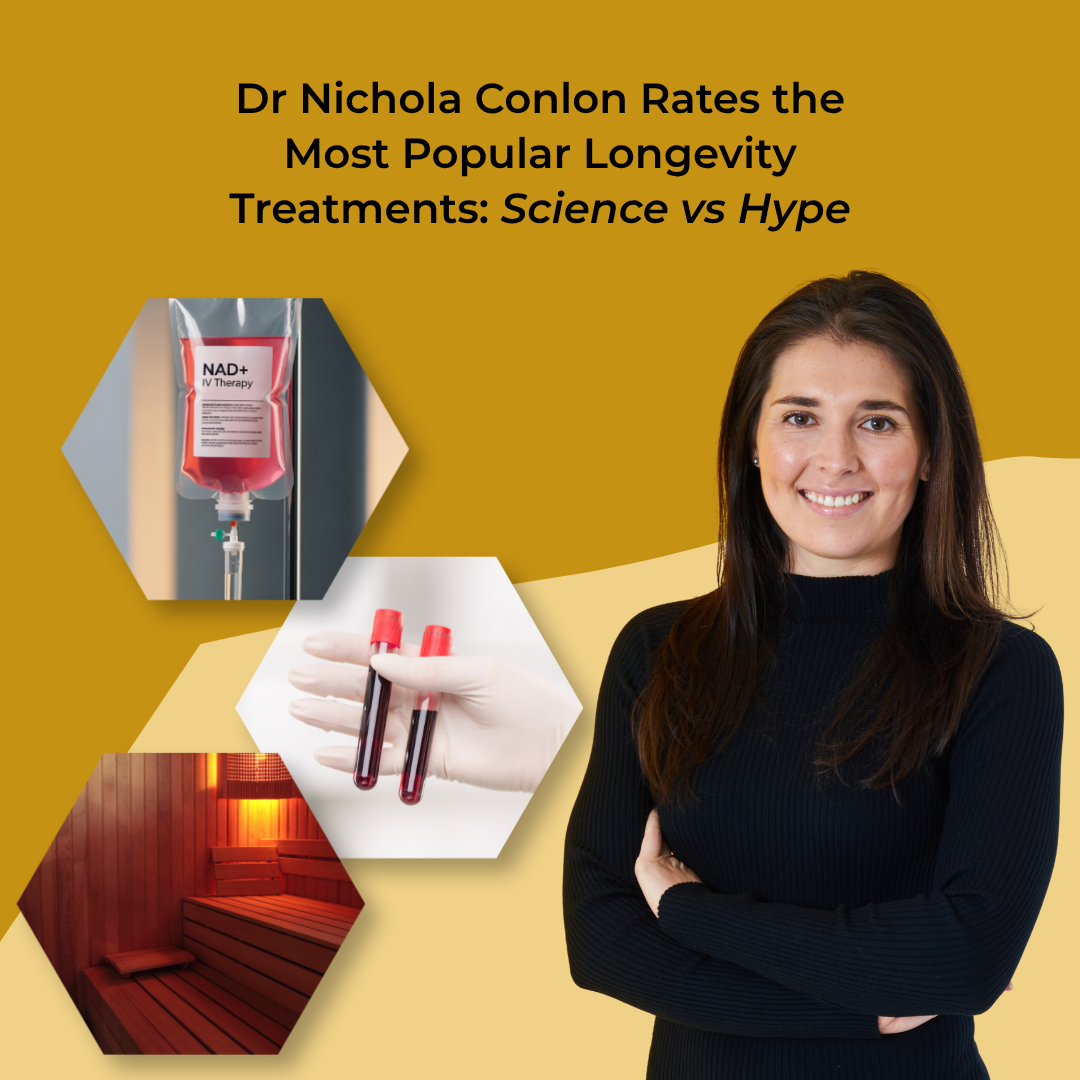
The Science Behind Biohacking: Which Longevity Treatments Actually Work?
Longevity clinics are rapidly becoming the go-to destination for those looking to optimise their health and slow biological aging. From NAD+ IV drips to peptide injections and hyperbaric oxygen chambers, these treatments are often marketed as cutting-edge solutions backed by science. But how much of this is grounded in robust human evidence and how much is driven by hype?
In this guide, Nuchido CEO and longevity expert Dr Nichola Conlon breaks down these popular longevity therapies, separating evidence from hype and highlighting accessible alternatives you can implement at home.
Top 10 Longevity Treatments:
- Peptide therapy
- NAD+ IV therapy
- Biological age testing
- Hyperbaric oxygen therapy
- Plasma exchange
- IV vitamin infusions
- Hormone optimisation
- Cryotherapy
- Red light
- Infrared sauna
Peptide Therapy
Peptide therapy involves the use of short chains of amino acids that act as signalling molecules in the body, influencing processes such as metabolism, tissue repair, immune function and hormone regulation. It is linked to longevity because certain peptides are being explored for their potential to support recovery, metabolic health, muscle maintenance, and healthy aging pathways.
My opinion: Some peptides have legitimate medical uses such as semaglutide for weight loss but “peptide therapy” as marketed by longevity clinics is a broad category with highly uneven evidence and many peptides that are promoted remain experimental, with zero or limited long-term human data.
Alternative: Resistance training and protein optimisation
Exercise and adequate dietary protein naturally stimulate many of the same anabolic, metabolic and repair pathways that peptide therapies aim to influence, including muscle protein synthesis, insulin sensitivity and growth signaling.
NAD+ IV Therapy
NAD+ IV therapy delivers NAD+ directly into the bloodstream. NAD+ is essential for cellular energy production and repair and levels decline with age. It is associated with longevity because maintaining NAD+ availability supports cellular health and resilience.
My opinion: Despite the huge popularity of clinics offering NAD+ IV infusions, the human clinical data is severely lacking in terms of safety and efficacy. Limited studies suggest the large NAD+ remains trapped in the blood and struggles to enter the cells where it is required. Emerging evidence suggests this can cause an inflammatory response which is not the desired outcome for longevity!
Alternative: Exercise, fasting and Nuchido TIME+
Both endurance exercise and periods of mild metabolic stress such as fasting can stimulate natural NAD+ production. I developed Nuchido TIME+ to activate these same pathways and increase your natural NAD+ production. In clinical studies, it has been shown to increase NAD+ levels, reduce markers of inflammation, and improve biological age.
Biological Age Testing
Biological age testing assesses biomarkers such as DNA methylation, blood chemistry, inflammatory markers, or functional health data to estimate how “biologically old” the body appears compared with chronological age. It is linked to longevity because it helps identify whether someone is aging faster or slower than expected and can guide personalised interventions.
My Opinion: Biological age testing is grounded in credible science and is increasingly used in research. It's limitation is not the concept itself, but the variability in test quality and how the results are interpreted and used in practice to guide follow-up advice
Alternative: Tracking functional biomarkers over time
Monitoring waist circumference, resting heart rate, grip strength, blood pressure, and fitness levels can provide meaningful, real-world insight into healthspan without the need for formal biological age testing. If you use a wearable device, tracking metrics such as heart rate variability (HRV), readiness scores, and sleep quality can also help indicate whether your daily habits are supporting, or undermining, your cellular health.
Hyperbaric Oxygen Therapy (HBOT)
HBOT involves breathing pure oxygen in a pressurised chamber to increase oxygen delivery to tissues. It is associated with longevity due to emerging research suggesting it may support cellular repair, reduce inflammation and enhance tissue regeneration.
My Opinion: HBOT is medically established for several clinical conditions including carbon monoxide poisoning and wound healing and some early studies suggest effects on regenerative pathways and biomarkers of aging, but longevity-specific data are still developing but I think its an exciting area to watch.
Alternative: Zone 2 (aerobic) and cardiovascular exercise
Regular aerobic exercise improves oxygen delivery, mitochondrial efficiency and vascular health, driving many of the same downstream benefits associated with improved tissue oxygenation.
Plasma Exchange
Plasma exchange, or therapeutic plasmapheresis, removes and replaces part of the blood plasma. In longevity settings it is theorised to help reduce circulating inflammatory or age-associated factors in the blood.
My Opinion: The rationale comes from compelling animal studies but robust human evidence for longevity applications is still sparse. At present it remains one of the more experimental interventions in longevity medicine.
Alternative: Anti-inflammatory lifestyle habits
Consistent exercise, quality sleep, weight management and an anti-inflammatory diet help reduce many of the inflammatory and metabolic factors plasma exchange is theorised to target.
IV Vitamin Infusions
IV vitamin therapy delivers vitamins, minerals and antioxidants directly into the bloodstream. It is linked to longevity primarily through its proposed role in correcting deficiencies, supporting cellular metabolism and reducing oxidative stress, although benefits are most meaningful when targeted to genuine clinical need.
My Opinion: IV nutrient therapy can be clinically useful in cases of but evidence supporting routine IV vitamin infusions for healthy individuals is limited.
Alternative: Nutrient-dense whole foods
For most healthy individuals, a diverse nutritious diet achieves the same goal more appropriately than routine IV therapy.
Hormone Optimisation
Hormone optimisation involves assessing and correcting age-related hormonal decline or imbalance, commonly including testosterone, oestrogen, progesterone and thyroid hormones. It is associated with longevity because hormonal balance can influence muscle mass, metabolic health, cognitive function and quality of life as we age.
My Opinion: When medically supervised and properly monitored, hormone optimisation has a strong evidence base for improving longevity particularly in women because female hormones after know to influence cellular health.
Alternative: Sleep, resistance training and metabolic health support
Lifestyle factors strongly influence endogenous hormone production and sensitivity, particularly sleep quality, body composition, stress management and exercise.
Cryotherapy
Cryotherapy exposes the body to extremely cold temperatures for short periods. It is marketed for recovery, inflammation reduction and metabolic stimulation. Its longevity relevance comes from the concept of hormesis where controlled stress may activate cellular resilience pathways.
My Opinion: Long-term clinical studies in humans are lacking but there is good evidence for short-term effects on recovery, inflammation and wellbeing, so I think its an interesting one to watch.
Alternative: Cold showers or cold-water immersion
Brief cold exposure at home may activate similar hormetic and recovery-related pathways without the cost of whole-body cryotherapy chambers.
Red Light Therapy
Red light therapy, or photobiomodulation, uses specific wavelengths of red and near-infrared light to stimulate mitochondrial function and cellular repair. It is linked to longevity because it may support energy production, skin health, tissue healing and inflammatory regulation at a cellular level.
My Opinion: There is increasing evidence for its beneficial effects on skin health, wound healing, hair growth, pain management and inflammation. The momentum of research is growing and it is considered as generally safe and minimal risk compared to many of the other longevity therapies
Alternative: Morning sunlight exposure
Natural sunlight especially in the morning supports circadian rhythm, mitochondrial signaling and metabolic health.
Infrared Sauna
Infrared saunas use infrared light to heat the body directly rather than warming the surrounding air. They are associated with longevity because heat exposure may improve cardiovascular health, circulation, detoxification pathways and activate hormetic stress responses linked to cellular resilience.
My Opinion: This one has robust human data supported by large epidemiological studies linking sauna use with cardiovascular and metabolic benefits, which are strongly tied to healthy aging.
Alternative: A hot bath
A study has shown that a hot bath which raises core body temperature, can have similar benefits by lowering blood pressure and inflammation.
While there are some incredibly innovative products and treatments emerging within the longevity space, many of the most popular therapies promoted online still lack robust scientific evidence that they meaningfully improve health outcomes. In contrast, the most consistently proven drivers of improved healthspan and longevity remain fundamental lifestyle factors such as regular exercise, optimal nutrition, quality sleep, and effective stress management. Before investing in expensive clinic-based interventions, it is essential to ensure these foundations are in place first.