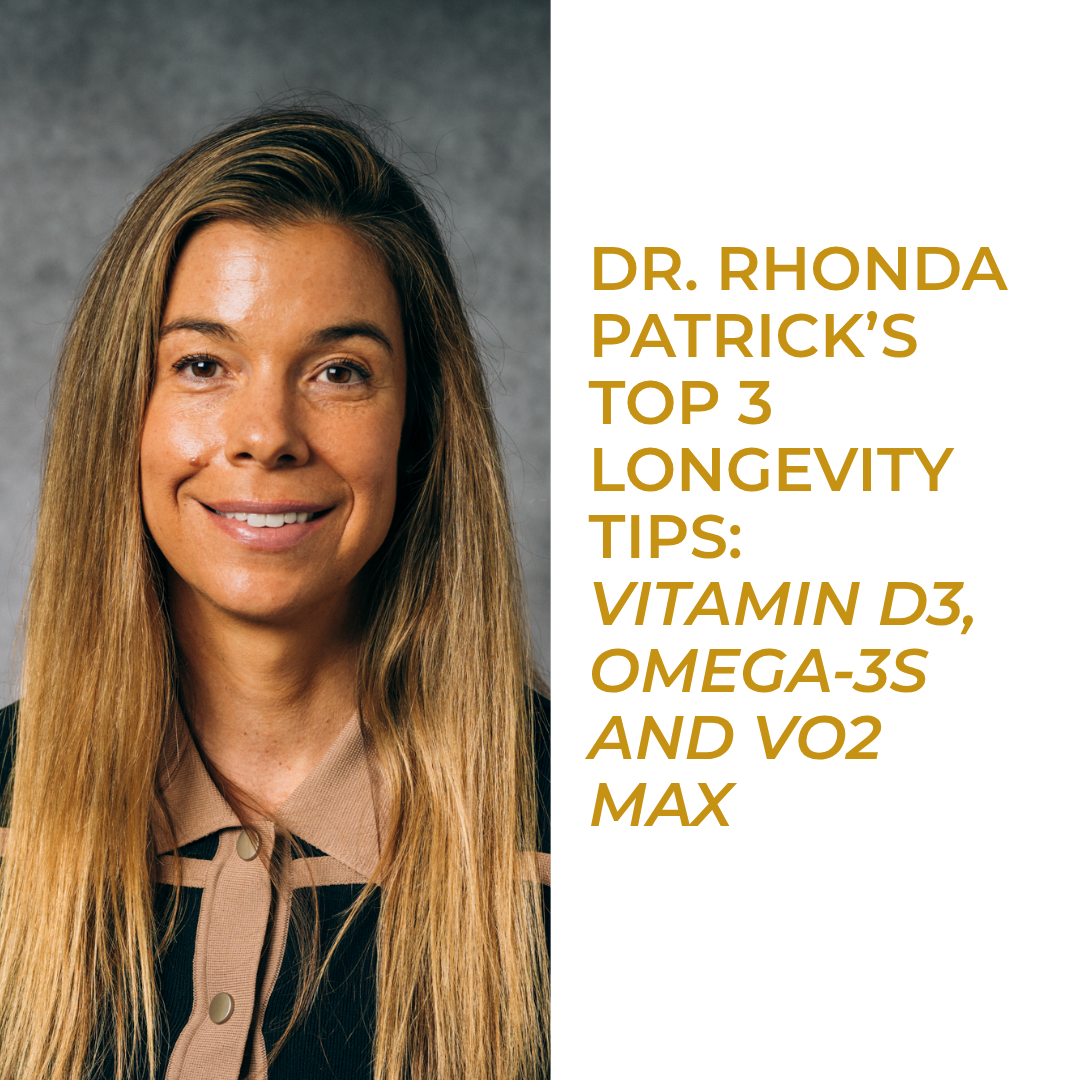
Dr. Rhonda Patrick’s Top 3 Longevity Tips: Vitamin D3, Omega-3s and VO2 Max
Dr. Rhonda Patrick is a biomedical scientist known for translating technical research into insights people can actually use in their everyday lives. Through her platform, FoundMyFitness, she has spent years synthesizing the latest research on nutrition, exercise, and cellular aging, making her a leading voice in the longevity space.
Her keynote at Healfx26 was a refreshingly data-driven look at the things that can genuinely make a difference to our health and longevity. Rather than focusing on the latest biohacks or trends, she took us through the research itself, unpacking studies and showing the data behind the recommendations. There were no sweeping claims or quick fixes, just a deep dive into what the science actually tells us.
Three topics in particular took center stage: vitamin D3, omega-3 fatty acids, and VO2 max. Here’s what we took away from her talk, and how you can put some of these evidence-backed insights into practice.
Dr. Rhonda Patrick’s 3 longevity takeaways
Vitamin D3: Maintaining adequate vitamin D is important for a wide range of biological processes. Many people don’t have sufficient vitamin D levels, so consider getting your levels measured and adding a quality supplement to your routine, particularly during the winter if you live in a colder climate.
Omega-3s: EPA and DHA play important structural and functional roles throughout the body, including supporting the body’s regulation and resolution of inflammation. Research has linked omega-3 status with healthy aging, with the DO-HEALTH trial also finding additional benefits when omega-3s were combined with vitamin D and exercise.
VO2 max: Cardiorespiratory fitness is one of the strongest predictors of long-term health and mortality risk. Improving your VO2 max doesn’t necessarily require hours in the gym; higher-intensity exercise and short bursts of vigorous movement can both help improve your fitness.
What does vitamin D3 do for health and longevity?
We tend to think of vitamin D as something we top up in winter and forget about in summer. The evidence suggests it deserves a lot more attention than that.
Vitamin D acts more like a hormone than a typical vitamin, and it is involved in regulating hundreds of genes. That’s a remarkable amount of influence for a single nutrient.
Despite this, vitamin D inadequacy is common. In the US, around 70% of people have inadequate levels, and maintaining sufficient vitamin D can become more difficult with age. Research suggests that a 70-year-old may produce around four times less vitamin D from sun exposure than someone in their twenties. Body fat, smoking, geography, and skin pigmentation can also affect vitamin D production and status.
Vitamin D has been linked with several important processes throughout the body, including immune function, cognitive health, neuroplasticity, and mitochondrial function. Low vitamin D status has also been associated with a higher risk of several age-related health conditions.
Can vitamin D affect biological aging?
A small but growing body of research has started looking specifically at the relationship between vitamin D and biological aging.
In the Berlin Aging Study, adults with vitamin D deficiency who began supplementing showed slower biological aging according to an epigenetic clock compared with those who remained untreated. A separate analysis from the same cohort found that vitamin D deficiency was associated with faster epigenetic aging over time.
How can you maintain healthy vitamin D levels?
If you’re unsure where your vitamin D levels stand, consider having them checked, particularly if you spend most of your time indoors, have limited sun exposure, or have darker skin.
Dietary sources include oily fish such as salmon, mackerel, and herring, as well as eggs and some mushrooms. For many people, particularly during autumn and winter, supplementation can be a practical way to maintain adequate vitamin D levels.
Why are omega-3 fatty acids important for healthy aging?
Omega-3 fatty acids play a foundational role in how the body functions. They are structural components of cell membranes, support brain and eye health, and are involved in the body’s regulation and resolution of inflammation.
Of the different omega-3s, EPA and DHA — the forms found primarily in oily fish — received particular attention during Dr. Patrick’s session.
What is the Omega-3 Index?
The Omega-3 Index is a blood test that measures EPA and DHA as a percentage of the fatty acids in red blood cell membranes. An Omega-3 Index in the region of 8–11% has been associated with better health outcomes in observational research.
Dr. Patrick highlighted a study that put the importance of omega-3 status into perspective. Looking at data from the Framingham Offspring cohort, researchers found that people with low omega-3 levels had a life expectancy similar to that of smokers, while people with higher omega-3 levels had a life expectancy similar to that of non-smokers.
That doesn’t mean low omega-3 levels are as harmful as smoking. But it does show just how strongly omega-3 status was linked to longevity in this study, a striking finding for something as simple as a nutritional marker.
Can omega-3s affect biological aging?
The DO-HEALTH trial looked directly at biological aging using several next-generation epigenetic clocks. Omega-3 supplementation on its own was associated with slower biological aging on some of these measures, while the combination of omega-3, vitamin D, and exercise showed additional benefits.
There’s also promising evidence around healthy aging of the muscles. Omega-3s combined with strength training may support greater improvements in muscle strength than training alone. Together, these findings suggest that omega-3s are an interesting area of research in healthy aging.
How can you get enough omega-3s?
Aim for two to three portions of oily fish a week, such as salmon, sardines, or mackerel. These provide EPA and DHA directly. If fish isn’t a regular part of your diet, plant sources such as walnuts, chia seeds, and flaxseeds provide ALA, although the body must convert ALA into EPA and DHA.
Testing your Omega-3 Index can also give you a more personalized picture of your status. If dietary intake is low, a good-quality omega-3 supplement may be a practical way to increase your intake.
Why is VO2 max important for longevity?
If there was one message from the summit that landed hardest, it was this: exercise — and specifically cardiorespiratory fitness — may be one of the most powerful longevity tools available to us.
VO2 max measures how efficiently your body can take in and use oxygen during exercise. It is one of the strongest measures of cardiorespiratory fitness and is one of the strongest predictors of long-term health and mortality risk we currently have. But the benefits of exercise extend beyond cardiovascular fitness.
One study found that a year of regular aerobic exercise increased hippocampal volume by around 2%, potentially offsetting one to two years of age-related volume loss in a region of the brain closely involved in memory. It’s a striking example of how regular movement can have measurable effects on the body and brain.
How can you improve your VO2 max?
One of the most effective and well-studied approaches to improving VO2 max is high-intensity interval training. Dr. Patrick highlighted the Norwegian 4x4 protocol: four minutes of high-intensity effort followed by three minutes of recovery, repeated four times.
Research from the Norwegian University of Science and Technology has demonstrated meaningful improvements in VO2 max following this type of interval training. Importantly, interval training has also been studied across a range of ages and fitness levels.
But you don’t need a structured 4x4 workout every day to benefit from higher-intensity movement.
What are exercise snacks and VILPA?
Vigorous Intermittent Lifestyle Physical Activity, or VILPA, refers to short bursts of vigorous activity built naturally into everyday life — taking the stairs quickly, walking uphill, or carrying something heavy.
Research using wearable devices has found that even a few short bursts of vigorous activity each day, often lasting just one to two minutes, are associated with lower mortality risk.
There is also growing interest in “exercise snacks” for blood sugar regulation. Short bouts of movement performed before or after meals have been shown to improve post-meal glucose control in some studies.
The takeaway? Exercise doesn’t have to mean an hour at the gym. Small bursts of movement, repeated consistently throughout the day, can still contribute to your overall activity and fitness.
How can you improve your fitness in everyday life?
Try incorporating one or two higher-intensity sessions into your week, whether that’s an interval workout, a brisk incline walk, or cycling. Alongside this, look for opportunities to add more vigorous movement to your everyday routine: take the stairs at pace, carry your shopping, or add a short burst of effort to a walk.
The goal isn’t perfection. It’s making movement a consistent part of your life.
What can we learn from Dr. Rhonda Patrick about longevity?
Perhaps the biggest takeaway from Dr. Patrick’s talk was that longevity doesn’t always require the latest intervention or most sophisticated biohack. Vitamin D3, omega-3 fatty acids, and cardiorespiratory fitness might not generate the same excitement as the latest longevity trend, but they have something far more important behind them: a growing body of scientific research.
And the evidence suggests these areas may work together, too. In the DO-HEALTH trial, the combination of vitamin D, omega-3s, and exercise produced additional effects on several measures of biological aging compared with individual interventions alone.
None of this is about chasing perfection or overhauling your life overnight. It’s about making small, evidence-led choices consistently, the kind that can help you build a stronger foundation for health as you age.
Longevity doesn’t have to mean chasing the newest intervention. Sometimes, the most powerful tools are also the most familiar: adequate nutrition, regular movement, and maintaining your cardiorespiratory fitness. That’s the essence of turning science into strength.